Sale of the Horrockses brand name

A few weeks ago I stumbled across a rather interesting piece of information that it has taken me a few weeks to formulate properly into a post, the sale of the Horrockses brand name. As regular readers of my blog will be aware Horrockses garments are one of my biggest passions, but I mostly focus on collecting those items that were produced before 1964. Understandably though, with the resurgence in popularity of vintage items by the brand I was intrigued by the sale of the brand name, and the bigger consequences there could be for both the collectability of Horrockses dresses, and also how a parent brand may use the name.
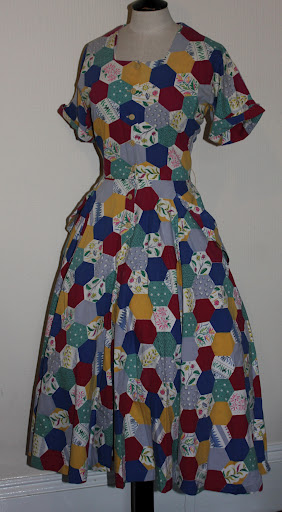
Horrockses dress with print by Alastair Morton 1950 © Liz Tregenza 2012
Firstly, a little background on the history of the changing hands of the brand name post the period I collect- I concentrate here on “Horrockses fashions” rather than simply “Horrockses”. The first sale of the Horrockses brand was in 1964 to Steinberg and Sons (Owners of Alexon) who secured the royal warrant for the brand[1]. The label continued until 1983, before it was eventually discontinued. I know towards the end they attempted a revival of the 50s look dresses, but this was unsuccessful. I’ve never seen one of these I have to admit though. This is just something I have heard about, but I would love to see one if anyone has one! The Horrockses label then laid relatively dormant until 2011 (used only for very basic bed linen on the whole). I can’t work out from a quick bit of research who owned it in this period, but I am sure I was told it was Dorma at some point down the line… I know they had the rights for Horrockses cottons for bed linens etc, just not sure on fashion. This seems plausible as Dorma was bought out by Dawson international holdings in 2005, who currently own the brand name. The reason for the sale of the Horrockses brand now is due to Dawson international holdings going into administration last year. From my scant knowledge of IP (digging into the 1 module I sat during my first degree here!) It appears that the tradmemarks that Dawson international hold covers the likes of cosmetics and furniture as well as the areas that Horrockses bed linen/ Ulster Weavers kitchen textiles currently operate the brand under . Dawnson international holdings also hold the trademark for the brand that covers textiles for fashion. [2]
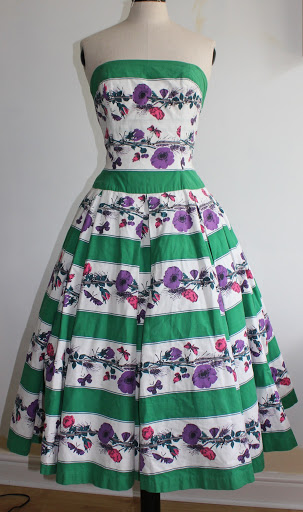
Horrockses dress by Pat Albeck- c. mid 1950s © Liz Tregenza
Original Horrockses prints have since 2011 been used for a limited collection of bed linen based on a number of original prints used for dresses, two of which I own (and love!). Personally I think this is a great way of re-using the original prints, without stepping on dangerous territory, but I am wary about the latest sale of the brand. My fear stems from how a brand may use the Horrockses name. Creating a new range of dresses based on Horrockses originals, in my opinion, would devalue vintage dresses and also cannot live up to the originals. This is partially due to manufacturing standards today and the fact that a key part of what made Horrockses such a distinctive brand was their use of fabric, and superior quality and advanced finishing techniques used on the fabric. Subject to modern manufacturing new Horrockses would loose their meaning. This is not simply personal elitism about the re-creation of the items, and not wanting others to have the same, I just feel that the “carbon-copies” which are likely to be produced will de-value the reputation of the brand as a whole.
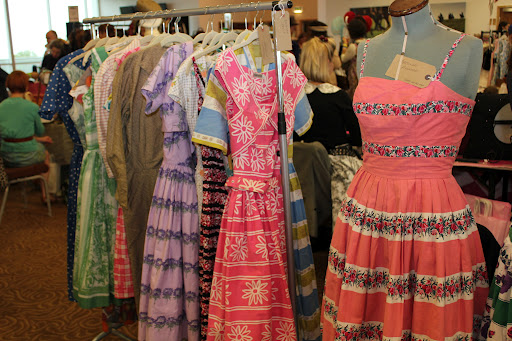
A selection of Horrockses from my personal collection © Liz Tregenza 2012
Revivng brand names has a chequered history. Chelsea girl for River Island is an example of how this can be done relatively effectively I believe. Whilst the Ossie Clark London brand is an example of a heinous crime. Others, such as the numerous relaunches of Biba have had a mixed reception. Again though I step back to one of my biggest bugbears, why can’t we design anything new? Referencing the past is fair enough, but the way in which it is done is often disrespectful of past designs/ designers, and also what the companies stood for. I think producing homewares based on the original prints and styles is much more acceptable- I really hope that whoever buys the brand goes down this route, and doesn’t try to re-create the dresses.  Information on the internet suggests that House of Fraser are interested in acquiring the brand.[3]I wonder if they are considering attempting a similar revival to that of the Biba brand from a few years ago, or whether they would be considering something totally different for the brand.
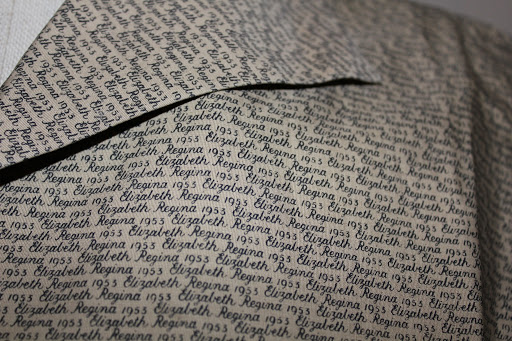
Close up detail of a print by Margaret Meades 1953 © Liz Tregenza 2012
I am also intrigued as to how the sale of the brand name relates to the prints themselves. Does this sale equate to a sale of the prints too? Would they have free reign to use any Horrockses prints they want? Or would the new buyer be restricted to copying original vintage items they can source? Horrockses employed numerous freelance print designers, so this in itself could be problemous. This is undeniably an area that I don’t fully understand, but needless to say I am intrigued by.
Metis parters who are dealing with the sale of the IP have called for bids of £50,000 or more (seems cheap to me!). Bidding for the brand closes on 2nd May…so lets see what happens.
And to whoever buys the brand, if you are after an expert on the company with around 75 original dresses you are looking at her ; )


[1] Christine Boydell, Horrockses fashions: Off the peg style in the 40s and 50s p.176

Horrockses and Margaret Meades

A few weeks ago I received a rather exciting email regarding Horrockses, and I suppose this blog posts as both a plea for anyone who owns/ has owned certain dresses and also providing some more information on the brand.

Horrockses during the 40s and 50s employed a large number of different designers to create their printed textiles, some such as Eduardo Paolozzi created only a few desings, whilst others, such as Pat Albeck and Graham Sutherland created huge numbers of designs for the company. Some designers, Albeck is a great example, have a very distinctive illustrative style which can be quickly recognised. Although others output and style was more varied. I know that some of the print designers worked on commissions for the fashion designers at the company (a lobster print created for John Tullis by Pat Albeck is a particular favourite of mine).

A typically Albeck design.

Although I have come across a large number of print designers for Horrockses  a chance search on twitter a few weeks ago turned up researchers gold.

One of the most special Horrockses I have is one printed with “Elizabeth Regina 1953”. Tht tweet related to this very print. The print was designed by Margaret Meades who worked freelance for Horrockses. Her designs weere mostly used in the early years of Horrockses fashions (late forties early fifties). 

Margaret trained at  Manchester College of Art where on graduating she continued to lecture for many years. Margaret was also a member of the Society of Industrial Artists.


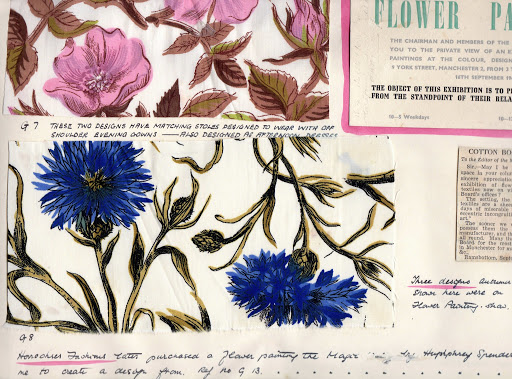
Here are a few more of Margaret’s designs which were kindly sent to me by her daughter. It would be great if anyone has the original dresses, so that they can be compared to her designs.

The print above has to be my favourite by Meades, and is also very familiar, I feel sure I have seen this one before!


If you would like to find out more about Margaret Meades do visit the website

http://highlandpaintingandprints.co.uk/index.html

Also! If you have orignal dresses that feature any of the prints i have shown please do send me pics.

liztregenza@hotmail.com

A quick note: All of these designs were sold to Horrockses, but they were not necessarily produced. As I explained in my post for Unmaking things Horrockses always overpurchased on textile designs to retain their design prestige.

You can read my post on Horrockses and marketing here

Investigating a mid 1950s floral dress

A few weeks ago I purchased what I thought was just another pretty homemade vintage dress from ebay.
What it turned out to be was something MUCH better.
When the dress arrived I had a cursory glance over it, and thought that the fabric looked a little bit like a Lucienne Day print. I was further intrigued by the fact that it felt heavier than traditional dress cotton- more like that used for curtains or furnishings.
                 
On turning the dress inside out I found that down the selvedge of the fabric were printed the initials e w. I knew straight away what these initials stood for- Edinburgh weavers. The brand Edinburgh weavers have close links with Horrockses, and has henceforth been a brand I have been interested in for a while now.

This meant that there was a possibility that the fabric of the dress might be a Lucienne Day print. I had a hunt through the two books about Day I have but didn’t strike lucky- increasingly realizing that whilst the print was similar to her work it wasn’t quite her style.
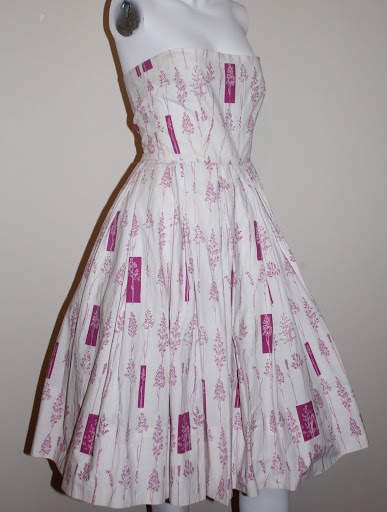
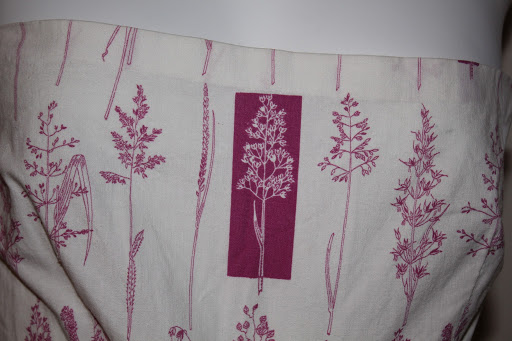
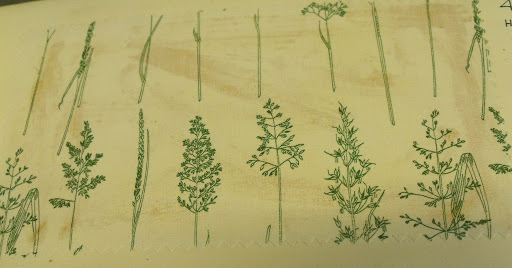
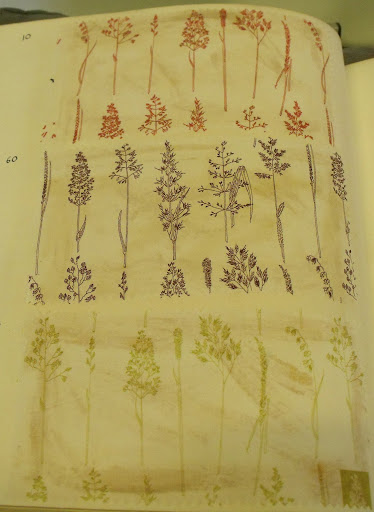
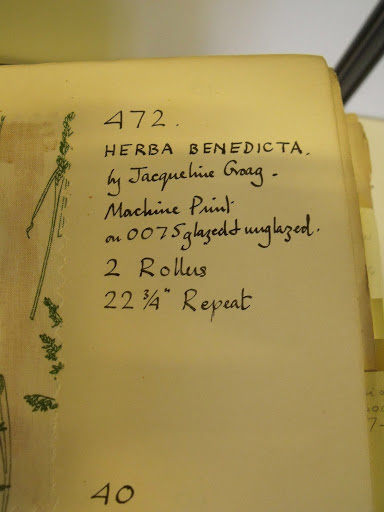
My next port of call was the Edingburgh Weavers book. Here I struck GOLD. I found THE pattern of my dress. The print was by Jacqueline Groag and dated to 1956. The pattern book that it originally came from is housed in the Victoria and Albert museum archive… so my next step of investigation was to go and see the original prints in the flesh!
But who was Groag? I think Groag really came to the public eye last year after the exhibition at the fashion and textile museum which featured the work of herself, Lucienne Day and Marianne Mahler. Groag was a true European figure. Begging life in Prague before moving to Vienna and London. She started her career working for the Wiener Werkstatte, a group of progressive visual artists working in Vienne in the early 20thcentury. She then went on to produce prints for the likes of Lanvin and Schiaparelli in Paris, before coming to London. In London she designed textiles for furnishing and fashion, and also wallpapers working for (amongst other companies) Liberty, John Lewis and of course Edinburgh weavers.
As a quick aside, the AAD is wonderful. Located at Blythe House there are the archives for a number of key British companies and designers. You can see further the archives that the AAD holds on their hub on the V& A website.
The huge pattern book that the original fabric sample were contained in was quite frankly amazing, passing through the pages I encountered so many prints that I recognized from the various books I have read which illustrated Edinburgh weavers fabrics.
Around half way through the book I found what I was looking for, the original colour ways for the fabric of my dress!!!

THE ACTUAL COLOURWAY OF MY FABRIC!

I was particularly interested that this came in such a variety of colourways, it seems that Groag in particular (or by the books standards at least) was producing her prints in the largest range of colours.
I also like that down the side of the fabric samples you have the full details on the fabric itself.
So after this research what do I think about my dress? I’m pretty sure this is a homemade example created from Edinburgh weavers fabric. The cut of the dress, construction method, zip and boning used all points to it being made in the 1950s. So my assumption is that someone bought the fabric- despite intended as furnishing fabric, and used it to make a very nice dress! I’m certainly happy to have an original 1956 Jacqueline Groag printed dress.


If you want to find out more about Jacqueline Groag this book is excellent (I’ve only had a chance to have a flick through it…must go back to it in more depth soon!)
Or for more about Edinburgh weavers. Lesley Jackson wrote a definitive guide to the company last year. http://www.amazon.co.uk/Alastair-Morton-Edinburgh-Weavers-Visionary/dp/1851776605