The little Minaudiere

Whilst I have been with the museum service I have had the opportunity to see some wonderful things. I just wanted to share with everyone this fantastic little item. It has been on display three times recently (Hampshire treasures, Dazzle and Little Black dress) and just harks back to a different time. It is made from shiny black and ivory Bakelite or an early form of plastic which is inset with tiny diamates in an Art deco design. It probably dates between 1923-25

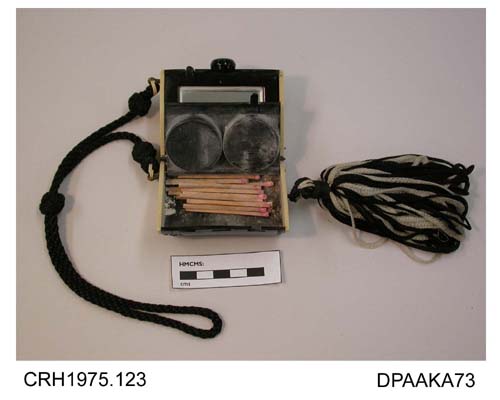
CRH1955.123

This little bag is what is known as a minaudiere which is a small cosmetic/vanity case carried in replacement of a handbag. Minaudieres like this one tended to be decorated with diamantes, I have seen a few other examples lavishly decorated all over with sparking gemstones.

One thing I like about this is how tiny it is. There would have been no room for money in this bag! Because, of course, as a bright young lady in the twenties you would expect everything to be bough for you! You can just imagine it as the perfect accessory to a beaded twenties dress.

Please visit http://www3.hants.gov.uk/museum/dress-and-textiles/bags-collection.htm to see more pictures and also view many other bags from the Hampshire Museums Service collection.
Your Grandad met Dior you know!


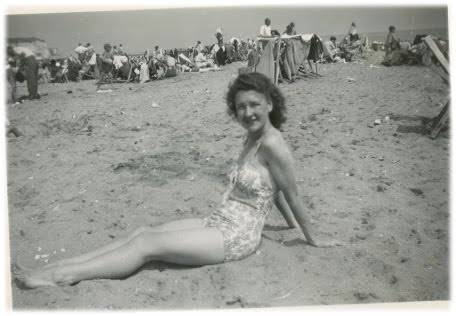
A few pics from the family archive today. All these feature my wonderful Nanna. A woman who simply tells the BEST stories.
On Thursday we were just chatting and I mentioned that I was reading a book about Dior. Nanna piped up “ your Grandad met him you know” I was like, Nanna are you sure? Shy, world hating, people-phobic Grandad Hugh met Dior? “Yes. He came over to London with his assistant and your Grandad met him, he drove him around London for his boss”. Still I am a little bit shocked by this! It must have been when my Grandad was working for the tailor Hector Powe. His boss there was someone who knew everyone and it appears that Christian Dior himself was one of these people!

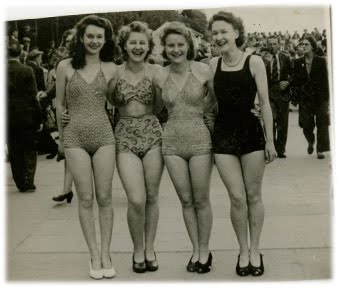
One of these pics proves a very important point too, about the bikini. This picture was taken in 1946 and one of the ladies (my Great Aunt) is wearing a bikini. Proving contrary to popular belief the bikini was a key fashion piece for the beach in the 40’s, even if it wasn’t referred to by that name!

A certain sense of self satisfaction

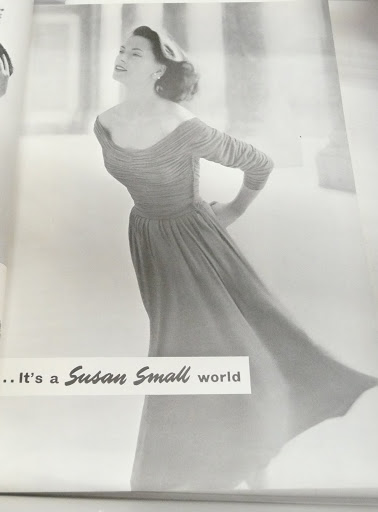
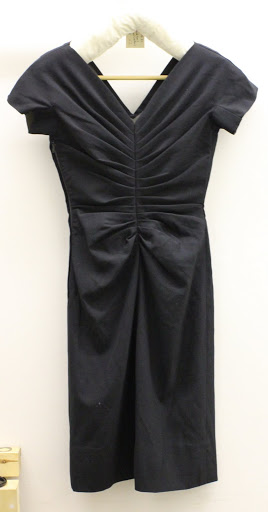
During my time at the museum service I have had a couple, what I would call “eureka” moments. For me that is discovering a garment in the collection advertised in a magazine or finding some kind of importance provenance. This happened twice whilst I was working on Little black dress. The first moment was with a dress by the company Susan Small. Whilst searching through copies of Vogues to display in the exhibition I suddenly stumbled across one of the dresses I had picked out! It was a real, goodness me! Moment. Seeing a dress in the collection on a human form really helps to give it a different meaning and helps you to see how it would have been worn at the time.


(its the dress on the left, apologies for the dark pic it was taken after the dress was put into the exhibition!)

The second time this happened to me was during exhibition set up. I was looking at a panel we had borrowed from Brighton museum and suddenly thought, that dress looks familiar. The dress in the image was a long sleeved dress by the company Roter Couture. I had chosen a similar dress to put in the exhibition although our was a shorter dress with short sleeves. I thought I would just check the dress and *see* if it may just happen to be the same dress but altered. Low and behold it was! (The dress has been turned into a short sleeve garment and the hem taken up by at least around 8 inches)

The only problem with the image on the panel was that it was quite small and difficult to see. Thankfully it was dated to 1956. I thought, maybe, just maybe this had come from a Vogue advertisement. So, again I went searching, and found it in the March 1956 issues of Vogue. I was very happy to have this kind of provenance appear again, and even better the dress had its full price and fabric details in the advertisement.


It is little details like this which really help to make exhibitions interesting for the public, all I can say is that I am pleased that my casual flicking turned up trumps on two occasions!